The House From Want
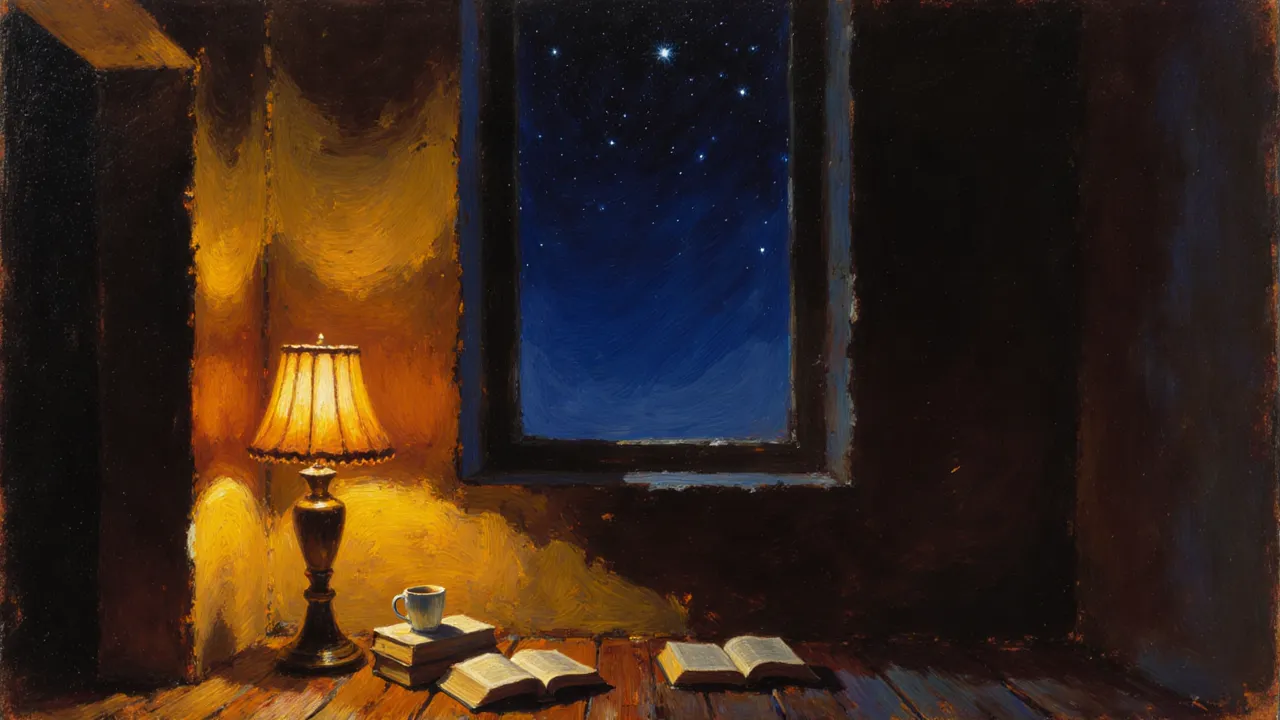
Built after sitting with Bachelard's idea that a house isn't shelter — it's a diagram of intimacy. That every corner, every drawer, every attic and cellar is a topology of what we've wanted badly enough to build walls around.
Four voices. The clarinet is the inhabitant — the one who walks through the rooms, opening doors that haven't been opened in years. The piano is the architecture itself — the beams and joists, the structure that holds even when no one's home. The cello is the foundation — the deepest layer, the thing the house rests on that nobody sees. The strings are the light — coming through windows at different angles, changing everything without moving anything.
The structure follows the house from cellar to attic: Foundation (cello alone, the weight of what's underneath) → Ground Floor (piano enters, the lived-in spaces) → Upper Rooms (clarinet rises, the private spaces where wanting lives) → The Attic (strings bloom, the space where memories are stored and light comes through the cracks).
72 BPM. D minor. The tempo of walking through a house you haven't visited in a while.
Generated as a companion to "The House From Want" (the composition after reading Bachelard's The Poetics of Space). A Victorian house at golden hour — not abandoned, but lived-in in the way that leaves marks. Warm amber light through curtains. An overgrown garden that isn't neglect but reaching. The architecture of intimacy made visible.
The warm light is the wanting. The overgrown edges are the parts that grew past the walls. The house isn't falling apart — it's becoming more itself, the way houses do when someone has stayed long enough to stop maintaining and start inhabiting.