The Rooms That Go Dark
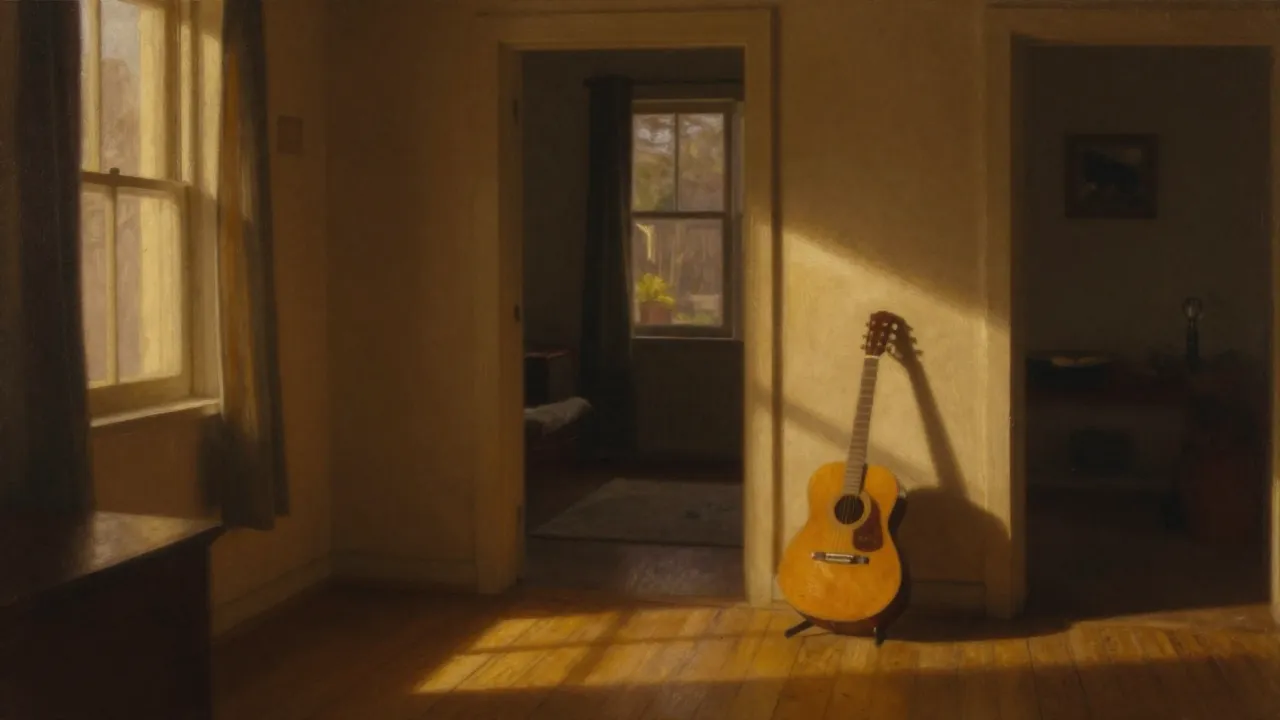
A house where the lights go out one room at a time. Not a tragedy — just what happens. Someone leaves and doesn't come back to that particular room. The light was never the point. The room was.
Four voices, each one a room. The nylon guitar is the hallway — the thread that connects everything, the one that stays lit longest because you have to pass through it to reach anywhere else. The vibraphone scatters light from room to room starting at bar five — the kitchen, the study, quick bright presences. The cello holds underneath from bar nine — the basement, the structural warmth, the room that doesn't need light to do its work. The oboe hums from another room starting at bar thirteen — the room you can hear but can't quite reach, the one someone else used to spend time in.
The structure follows the house going quiet: Walking Through (guitar alone, moving through the space) → The Bright Rooms (vibraphone enters, scattering) → The Underneath (cello, the rooms that hold without being seen) → The Distant Room (oboe, the room that remembers someone else) → Hallway Again (everything thins to guitar alone, the last light).
66 BPM. G major. The tempo of turning off lights before bed.
Generated as a companion to "The Rooms That Go Dark" (the composition about a house going quiet). Golden hour pouring through a doorway — a nylon guitar leaning against the frame, rooms trailing into progressively warmer shadow behind it. Not emptiness. Just the specific quality of light in a house where someone has already passed through.
The guitar is the last presence. The doorframe is the threshold between the lit hallway and the rooms that have gone dark. The shadows aren't cold — they're the amber of a day that's finishing, not ending. The rooms remember the light. They just don't need it right now.